
When you visit a chiropodist or podiatrist, you’re trusting that every instrument used on your feet is clean, safe, and fully sterilized. At Whitby Family Footcare, infection control isn’t just a routine, it’s a core part of how we protect your health. One of the most common questions patients ask is:
“How do you sterilize your instruments?”
Here’s exactly what happens behind the scenes to ensure your care meets the highest standards.
Our Sterilization Process Is Guided by IPAC Standards
All of our cleaning, disinfection, and sterilization procedures follow IPAC (Infection Prevention and Control) best practices, along with the standards set by the College of Chiropodists of Ontario. These guidelines ensure that every step of instrument reprocessing is safe, consistent, and medically sound.
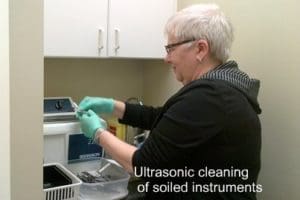
1. Instruments Are Cleaned Immediately After Use
After each appointment, instruments go through a thorough cleaning process:
- Rinsing to remove visible debris
- Manual or ultrasonic cleaning to break down microscopic particles
- Drying to prevent corrosion and ensure proper sterilization
IPAC guidelines emphasize that effective sterilization is only possible when instruments are completely clean, so this step is essential.
2. Instruments Are Packaged in Sterile Pouches
Once cleaned, instruments are:
- Inspected for wear or damage
- Organized into treatment sets
- Sealed in medical‑grade sterilization pouches
Each pouch includes chemical indicators that change colour only when the correct sterilization conditions are met — another IPAC requirement.
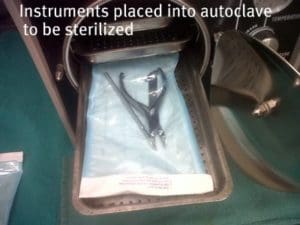
3. Instruments Are Sterilized in a Medical‑Grade Autoclave
The autoclave is the gold standard for sterilization in healthcare settings. It uses:
- Pressurized steam
- High heat
- Precise exposure times
This combination destroys bacteria, viruses, fungi, and even heat‑resistant spores.
Every cycle is monitored for:
- Temperature
- Pressure
- Time
- Chemical indicator changes
If anything is outside IPAC‑approved parameters, the instruments are reprocessed.
4. Routine Biological (Spore) Testing
IPAC guidelines require regular biological testing to confirm that the autoclave is functioning properly. These tests verify that the device can kill even the most resistant microorganisms.
We perform these tests on a strict schedule to ensure ongoing safety and compliance.

5. Sterile Storage Until Your Appointment
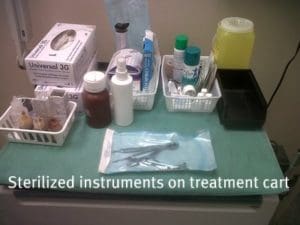
Once sterilized, instruments remain sealed in their pouches until the moment they’re used. If a pouch is opened, torn, or compromised in any way, the instruments are immediately reprocessed — no exceptions.
What This Means for You
When you visit Whitby Family Footcare, you can feel confident knowing:
- Every instrument used on you has been fully sterilized
- Our processes follow strict IPAC and regulatory standards
- We exceed the minimum requirements for safety and infection control
- Your health is protected at every step
Clean instruments aren’t just a behind‑the‑scenes detail — they’re a cornerstone of safe, professional footcare.
Comments
Post a Comment