
Posterior heel pain is one of the most common foot complaints in active children—especially boys aged 10–12. A typical patient is a 12‑year‑old boy who plays soccer in cleats, often experiencing pain after practices or games. The most common cause is calcaneal apophysitis (Sever’s disease), a temporary irritation of the heel’s growth plate. Although painful, it’s not dangerous, and kids recover fully with proper care.
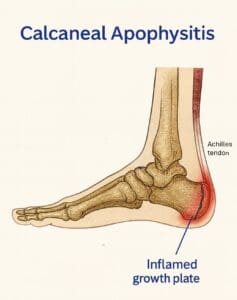
Diagram demonstrating calcaneal apophysitis
Why It Happens
The growth plate at the back of the heel stays open until about age 14–15, making it sensitive to stress. Running, jumping, tight calf muscles, and high‑impact sports—especially soccer in firm cleats—place extra tension on this area. Over time, the Achilles tendon repeatedly pulling on the growth plate leads to irritation and pain.
Common Symptoms
Parents often notice:
- Pain at the back or sides of the heel
- Limping or toe‑walking
- Pain when the heel is squeezed
- Discomfort with running or jumping
- Mild swelling or warmth
Symptoms usually develop gradually rather than after a single injury.
Who’s Most Affected
This condition is most common in:
- Kids aged 9–14
- Children who play soccer, basketball, football, gymnastics, or run
- Kids with tight calves or reduced ankle mobility
- Those with flat feet, high arches, or rapid growth spurts
Again, your typical case—an active 12‑year‑old soccer player in cleats—fits this profile perfectly.
How We Assess It
Assessment includes:
- A detailed history
- Physical exam
- Heel squeeze test
- Gait and footwear evaluation
X‑rays are rarely needed.
Effective Treatment Options
Most children improve within 2–8 weeks with conservative care:
1. Activity Modification
Reduce—but don’t eliminate—impact activities. Low‑impact options like cycling or swimming help symptoms settle.
2. Stretching
Daily calf and Achilles stretches reduce tension on the growth plate and are strongly supported by recent research.
3. Heel Cups, Lifts & Orthotics
These reduce stress on the heel and Achilles tendon. Orthotics help when foot posture contributes to symptoms.
4. Footwear Optimization
Supportive shoes with slight heel elevation, firm heel counters, and shock‑absorbing soles make a significant difference.
Worn‑out or flat soccer cleats often worsen symptoms.
5. Ice & Short‑Term Anti‑Inflammatory Strategies
Ice after activity can help. NSAIDs only if recommended by a healthcare provider.
6. Strengthening
Once pain improves, strengthening the calves, foot muscles, hips, and glutes helps prevent recurrence.
7. Short‑Term Immobilization
Reserved for severe cases; a walking boot may be used briefly.
Prognosis
Calcaneal apophysitis is self‑limiting and resolves once the growth plate closes. With proper care, children return to full activity without long‑term issues.
When to Seek Care
Book an assessment if your child:
- Has heel pain lasting more than 1–2 weeks
- Is limping or avoiding activity
- Has pain in both heels
- Experiences swelling after an injury
- Has symptoms affecting sports or daily life
Comments
Post a Comment