
Once you understand what’s causing your foot problem, the next question is usually the most important: “How do we fix it?” Foot issues can come from many different tissues — joints, tendons, ligaments, nerves, skin, or nails — but most respond well to early, targeted care. Treatment at Whitby Family Footcare Clinic focuses on reducing irritation, restoring function, and preventing the problem from returning.
Recovery time depends on the type of tissue involved, how long the issue has been present, and how irritated it is at the time of assessment. The goal is always to help you feel better as quickly and safely as possible.
How Foot Problems Are Treated
Treatment is tailored to the specific structures involved and the underlying cause identified during your assessment. Common approaches include:
- Activity modification — reducing or adjusting movements that overload the irritated tissue while keeping you mobile.
- Footwear changes — selecting shoes that match your foot type, activity level, and daily demands.
- Orthotics or supportive devices — redistributing pressure, improving alignment, and reducing strain on painful areas.
- Manual therapy — hands‑on techniques to improve mobility, reduce tension, and support healing.
- Exercise therapy — strengthening, stretching, and mobility work to restore function and prevent recurrence.
- Skin and nail care — managing calluses, corns, cracked skin, fungal nails, or ingrown toenails.
- Offloading and padding — reducing pressure on irritated joints, tendons, or skin lesions.
- Infection management — addressing fungal, bacterial, or nail infections when present.
Most treatment plans combine several of these approaches to address both symptoms and root causes.
How Long Does It Take to Get Better?
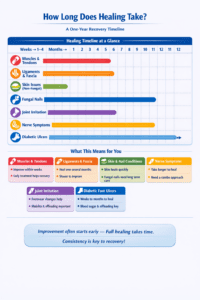
Healing time varies depending on the tissue involved:
- Muscles and tendons often improve within a few weeks when treated early.
- Ligaments and fascia may take longer, especially if the irritation has been present for months.
- Skin and nail issues can improve quickly, but fungal nails require longer-term management.
- Joint irritation often responds well to offloading, footwear changes, and mobility work.
- Nerve-related symptoms may take more time and require a combination of strategies.
- Diabetic foot ulcers can take weeks to several months to heal. Progress depends on circulation, blood sugar control, infection management, and how well the area is offloaded.
Most patients begin to feel improvement within the first few visits, especially once the underlying cause is identified and addressed. Chronic or long-standing issues may require a longer recovery timeline, but early intervention almost always leads to better outcomes.
What to Expect During Your Treatment Plan
Your treatment plan is built around three goals:
- Reduce irritation — calming down the painful or overloaded tissue.
- Restore function — improving mobility, strength, and movement patterns.
- Prevent recurrence — addressing footwear, biomechanics, and daily habits.
Each plan is individualized, but most follow a similar structure:
- A clear explanation of the identified problem
- A step-by-step treatment outline
- Guidance on what to do at home
- Follow-up visits to monitor progress and adjust care as needed
This approach ensures that you understand what’s happening, what to expect, and how to support your own recovery.
Final Thoughts
Most foot problems are highly treatable when the underlying cause is identified early. With the right combination of hands‑on care, footwear guidance, and targeted treatment, you can expect steady improvement and a clear path back to comfortable movement.
Book Now
Comments
Post a Comment